
Compatibility and Retention: Why Student Pairing Influences Dropout Rates

Kimora Lee
Technical Writer

Student retention is one of the biggest challenges in higher education today. Universities invest heavily in recruitment, but keeping students engaged and enrolled until graduation is often a tougher battle. One overlooked factor? Student compatibility.
From roommates to study groups, the people students interact with daily play a direct role in shaping their overall college experience. Misalignments in personality, lifestyle, or academic goals can lead to stress, dissatisfaction, and ultimately higher dropout rates. On the other hand, when students are paired thoughtfully, they’re more likely to thrive both academically and socially.
This is where Easy Pairing comes in, using AI-driven compatibility insights to help institutions foster environments that make students want to stay.
Why Compatibility Matters for Retention
Retention rates don’t drop by accident; they often stem from deeper issues tied to student well-being. Research highlights that:
- Roommate conflicts are a top driver of stress in residence halls, impacting both academic focus and mental health.
- Study group mismatches reduce collaboration quality, leaving students disengaged or carrying uneven workloads.
- Lack of belonging contributes significantly to students feeling disconnected and considering withdrawal.
By addressing these underlying issues, schools can create stronger foundations for long-term student success.
How Easy Pairing Supports Retention
Easy Pairing tackles this challenge by pairing students based on compatibility traits that extend beyond basic demographics. Its AI system analyzes:
- Living habits (night owl vs. early riser, neat vs. relaxed)
- Academic priorities (grade-focused vs. balanced with extracurriculars)
- Social preferences (outgoing vs. reserved, group-oriented vs. independent)
- Communication styles (direct, collaborative, flexible)
By aligning these factors, institutions reduce friction and foster relationships that support well-being and persistence.

The Ripple Effect of Smart Pairing
- Stronger sense of belonging – Students feel connected and supported.
- Improved academic performance – Less stress allows greater focus on coursework.
- Healthier mental well-being – Reduced conflicts and increased support networks.
- Higher graduation rates – Students are more likely to persist when satisfied socially and academically.
This ripple effect shows why compatibility-driven matching isn’t just a “nice-to-have”; it’s a powerful retention strategy.
From First-Year Success to Graduation
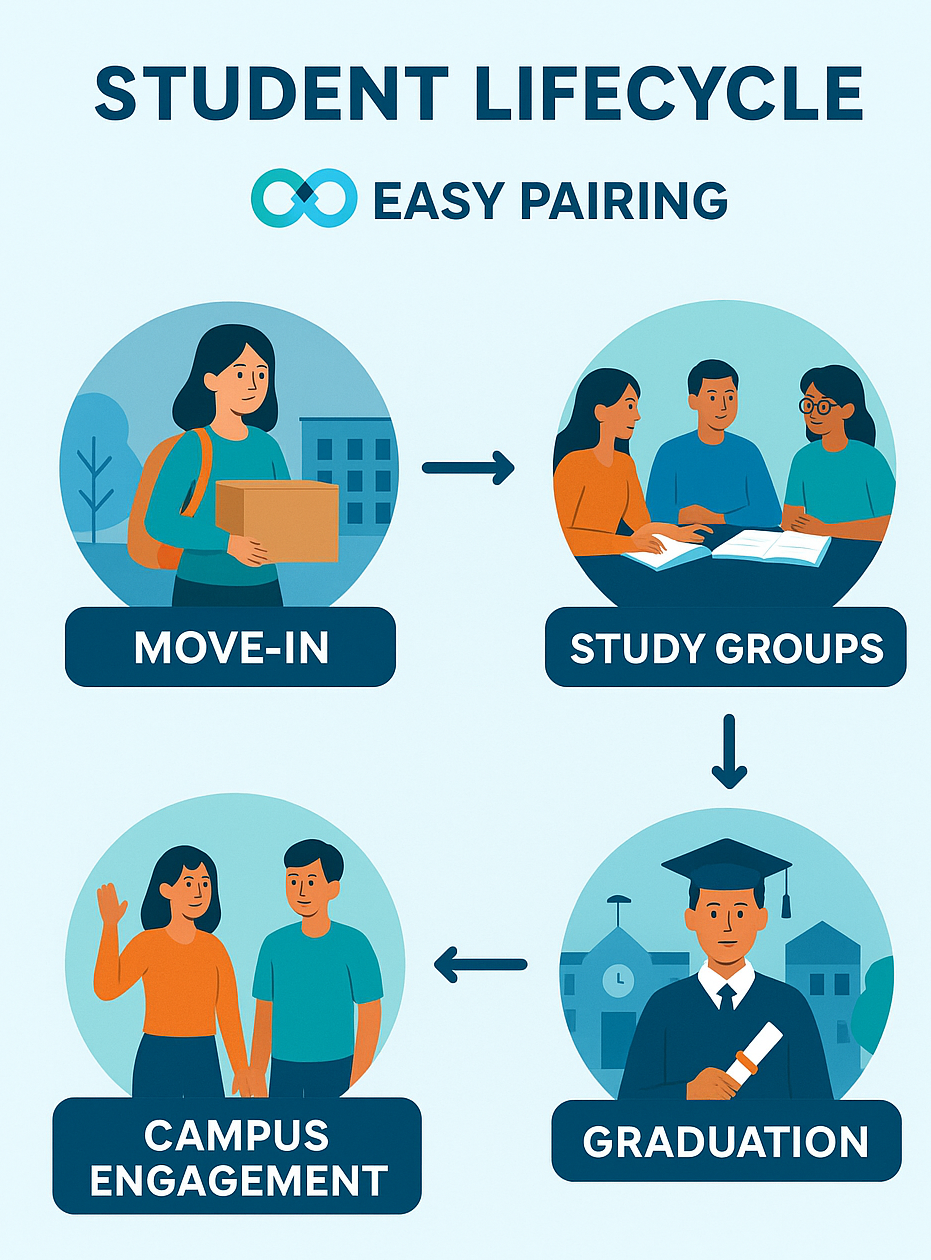
First-year students are the most vulnerable to dropout, making compatibility especially critical during onboarding. A smooth housing or study group experience early on creates momentum that carries through the rest of their academic journey.
With Easy Pairing, institutions can ensure that the relationships formed on day one: roommates, study partners, project teammates, are set up for success. These bonds foster resilience, helping students navigate challenges and stay motivated all the way to graduation.
Conclusion
Dropout prevention isn’t just about academic support; it’s about human connections. Students who feel supported, understood, and aligned with their peers are far more likely to stay the course.
With its AI-driven compatibility insights, Easy Pairing empowers institutions to make smarter pairing decisions that enhance student satisfaction, boost retention, and strengthen overall campus culture.
By recognizing the role of compatibility in retention, schools can transform their student experience, from the first day on campus to the walk across the graduation stage.
Ready to transform your group matching?
Join thousands of organizations using Easy Pairing to create better teams and connections.
Get Started Free