
Cross-Disciplinary Sparks: How AI Matches Researchers for Breakthrough Discoveries

Jackson Brooker
Product Manager

Some of the world’s biggest breakthroughs; from medical diagnostics to renewable energy, happen when disciplines collide. Yet, connecting researchers across fields remains one of academia’s greatest challenges. Scientists often operate in silos, separated by departments, methodologies, or even languages of expertise.
That’s where Easy Pairing steps in. By using AI-powered compatibility matching, it bridges gaps between researchers, pairing minds that complement each other’s strengths and fostering collaborations that lead to true innovation.
Breaking the Silos: The Need for Smart Collaboration
Despite the global shift toward interdisciplinary research, most collaborations still rely on word of mouth, conferences, or institutional networks. This limits opportunities for synergy, especially for early-career researchers or those in underrepresented fields.
Easy Pairing tackles this limitation head-on. Its AI analyzes key compatibility traits; such as research interests, methodology preferences, communication styles, and collaboration goals, to connect researchers who might otherwise never meet.
When matching considers how people think and collaborate, not just what they study, the results are powerful.
The Mechanics of Researcher Matching
Easy Pairing applies intelligent algorithms that go beyond keywords or academic credentials. It identifies complementarities that lead to productive partnerships, including:
- Cognitive alignment: Matching problem solvers with creative thinkers for balance.
- Skill synergy: Pairing data scientists with domain experts to maximize analytical and contextual depth.
- Collaboration rhythm: Aligning scheduling preferences, communication frequency, and project timelines.
- Motivational drivers: Matching curiosity-led researchers with solution-focused ones to sustain project momentum.
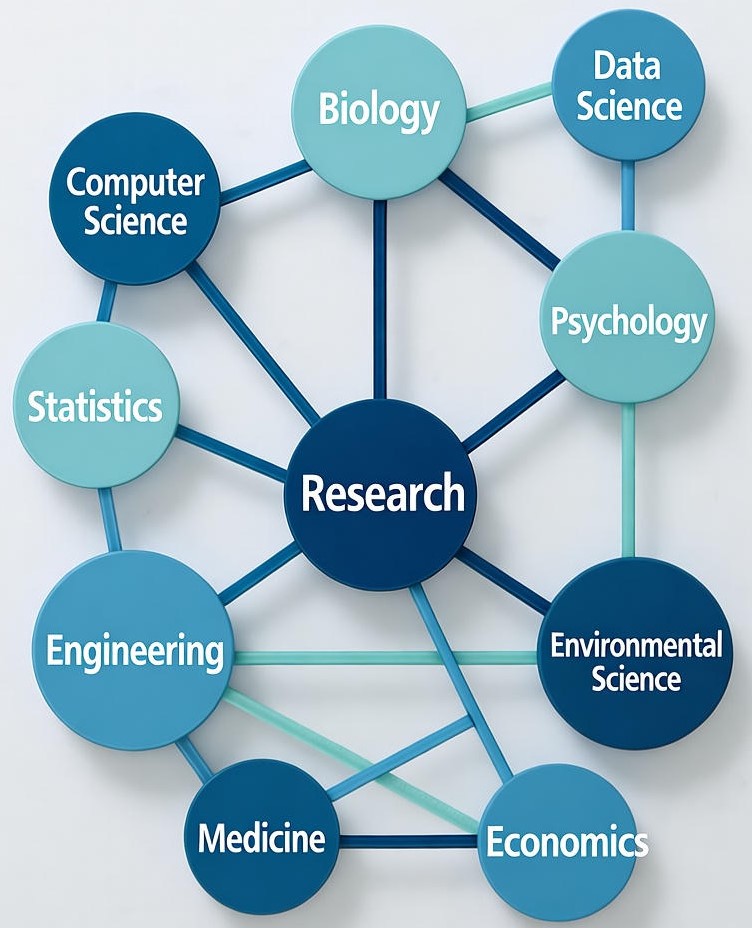
By mapping out intellectual and behavioral compatibility, Easy Pairing helps research institutions form partnerships that thrive both professionally and personally.
Transforming How Discovery Happens
Cross-disciplinary collaboration isn’t just about combining expertise; it’s about aligning mindsets. When researchers with complementary motivations work together, they are more likely to:
- Generate novel hypotheses through diverse perspectives.
- Co-author impactful papers with broader implications.
- Accelerate research-to-application pipelines.
- Sustain long-term partnerships across institutions and geographies.
This is particularly crucial in addressing complex global issues like climate change, healthcare equity, and digital ethics, where single-discipline approaches fall short.
Institutional Benefits of AI Pairing
Universities and research centers benefit greatly from adopting AI matching tools like Easy Pairing:
- Efficiency: Reduces time spent searching for collaborators.
- Inclusivity: Ensures underrepresented researchers are visible in partnership networks.
- Scalability: Supports global partnerships without geographical limitations.
- Data insights: Provides administrators with analytics on collaboration trends and success rates.
When AI manages the complexity of pairing, institutions can focus on supporting the human side; mentorship, funding, and impact measurement.
The Future of AI-Driven Collaboration
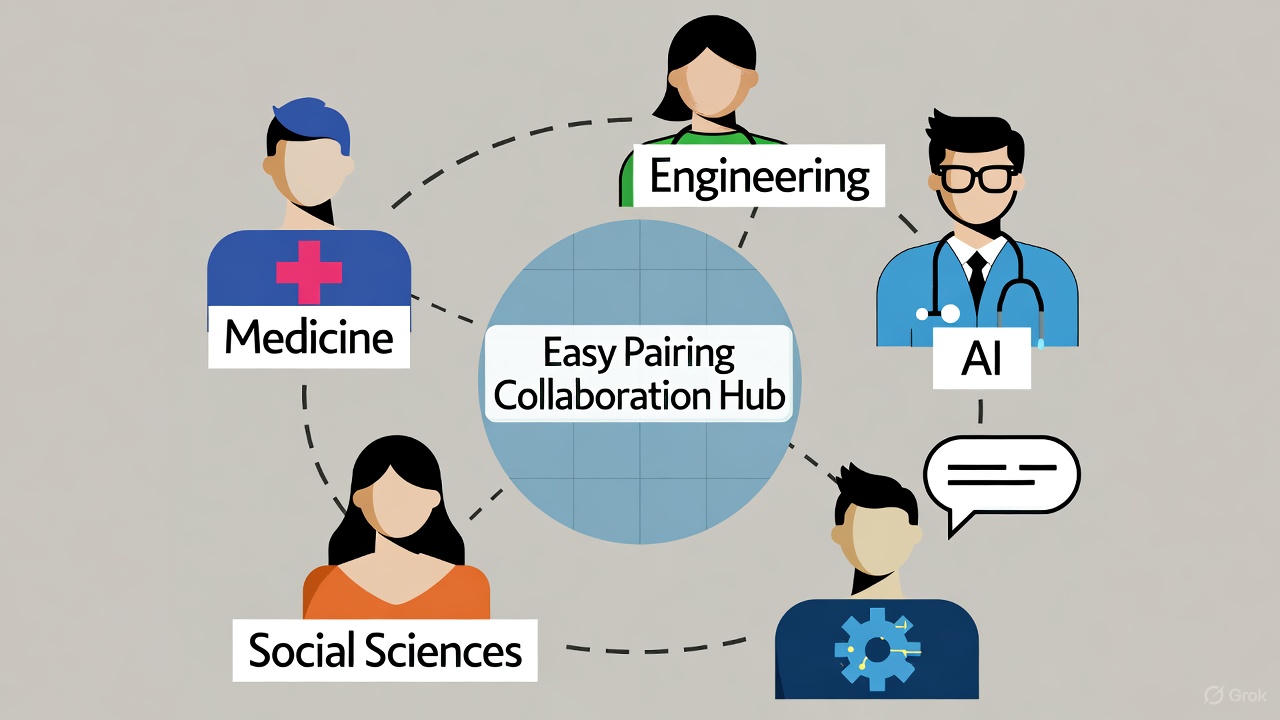
The next frontier of research isn’t just technological, it’s relational. Easy Pairing’s model shows that the future of discovery lies in how effectively we connect diverse thinkers. By uniting computational power with human creativity, it transforms fragmented academic systems into cohesive ecosystems of shared purpose.
Conclusion
Easy Pairing redefines research collaboration by focusing on compatibility, diversity, and shared innovation. By breaking down disciplinary barriers, it helps researchers forge partnerships that push the boundaries of what’s possible. In a world where ideas move faster than ever, AI doesn’t replace human curiosity; it amplifies it, turning connection into discovery.
Ready to transform your group matching?
Join thousands of organizations using Easy Pairing to create better teams and connections.
Get Started Free