
From Job Fit to Culture Fit: Why Pairing Tech is the Future of Recruitment

Recruiters have always focused on job fit: does a candidate have the technical skills and experience to perform the role? That question still matters but it no longer tells the whole story. Today's organizations need hires who not only can do the work, but who will thrive within their team culture. That’s why pairing technology, which evaluates both capability and compatibility, is reshaping hiring practices. Tools like Easy Pairing move recruitment from a transactional exercise to a strategic matching process that considers performance and belonging together.
The Limits of Hiring for Job Fit Alone
Hiring for job fit emphasizes resumes, certifications, and technical interviews. These methods surface competence, but they miss interpersonal dynamics and cultural alignment. As a result, organizations experience:
- Costly turnover when new hires don’t settle in.
- Slower team productivity due to mismatched collaboration styles.
- Reduced morale as cultural friction erodes trust.
In short, job fit answers “can they do the work?” while culture fit answers “will they belong and contribute?” Both questions are essential.
Why Culture Fit and Culture Add Matter
Culture fit is about shared values, norms, and ways of working. Increasingly, companies balance culture fit with culture add; the fresh perspectives new hires bring that strengthen teams. Pairing tech evaluates both by assessing:
- Values alignment (mission-driven vs. product-driven mindsets)
- Communication style (direct, diplomatic, or asynchronous-first)
- Work rhythm and feedback preferences (sprints vs. steady workflows)
- Leadership and collaboration approaches

How Pairing Tech Works in Recruitment
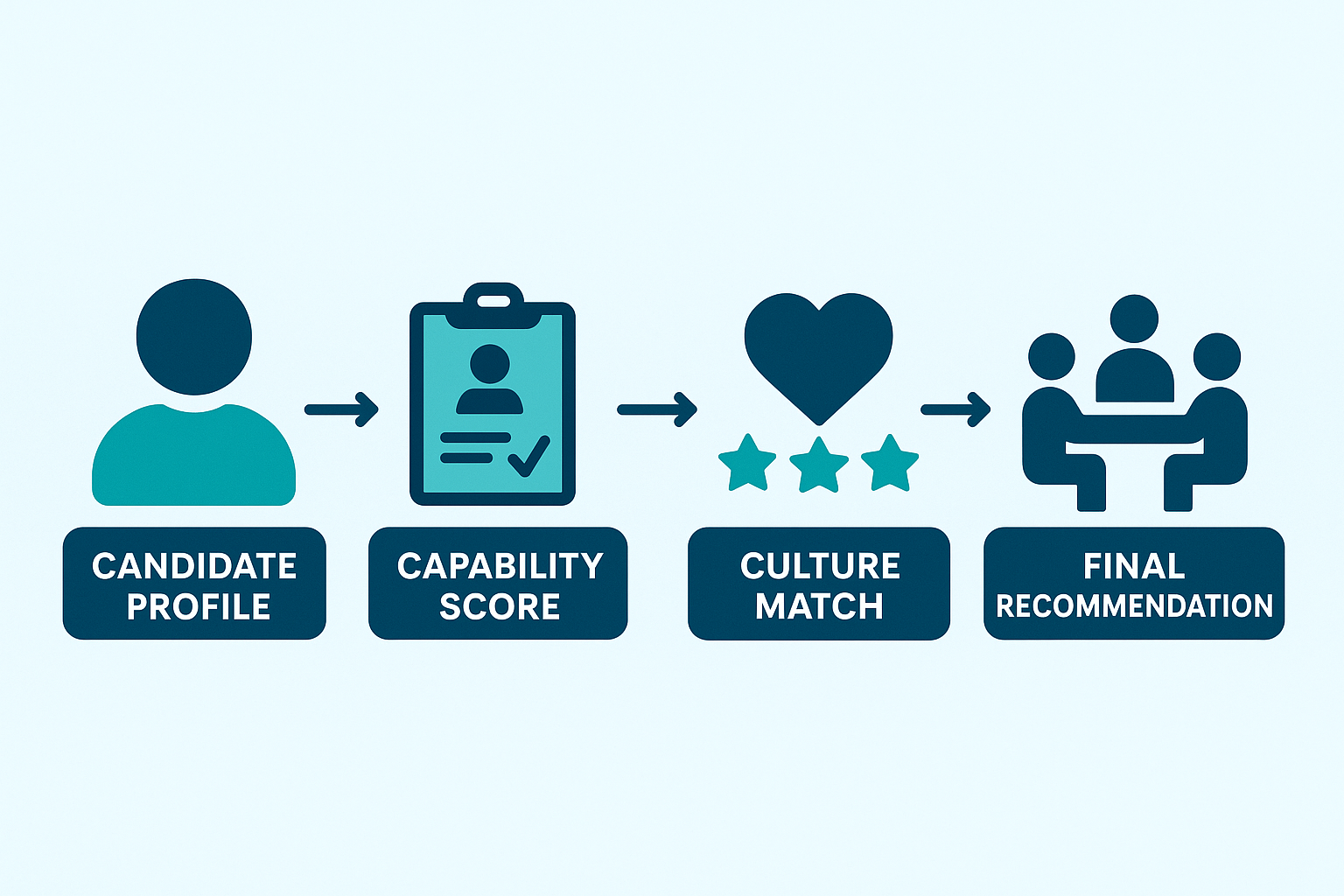
Pairing platforms combine structured inputs and behavioral insights. Candidates complete tailored questionnaires and provide signals from interviews, work samples, or assessments. The platform then:
- Scores technical capability against job requirements.
- Analyzes cultural alignment with the hiring team and company values.
- Ranks matches by combined fit scores.
- Recommends onboarding buddies or complementary teammates to accelerate ramp-up.
Easy Pairing integrates with applicant tracking systems so recruiters see compatibility scores alongside traditional hiring metrics, making decisions faster and more holistic.
Practical Benefits and Use Cases
Organizations that adopt pairing tech see measurable improvements:
- Lower new-hire turnover and recruiting costs.
- Faster time-to-productivity through better onboarding matches.
- Stronger team cohesion and fewer conflict incidents.
- Smarter internal mobility by matching employees to roles where they’ll thrive.
Use cases include early-career programs, leadership placements, cross-functional project staffing, and diversity initiatives where matching on values and experience is critical.
Implementing Pairing Tech Successfully
To get the most from pairing platforms, HR leaders should:
- Define core cultural attributes and success behaviors for teams.
- Blend objective skills data with self-reported preferences and behavioral signals.
- Pilot the tool in one hiring stream (e.g., campus hires) and measure retention and engagement.
- Train hiring managers to use compatibility insights alongside interview notes.
Pairing tech is not about replacing human judgment; it enhances human decisions with evidence-based recommendations.
Conclusion
The future of recruitment balances job fit with culture fit. Pairing technology like Easy Pairing elevates hiring from role-filling to relationship-building, ensuring candidates not only perform but also belong. Organizations that embrace compatibility-driven recruitment will hire people who stay, innovate, and grow, turning hiring into a strategic advantage rather than a recurring cost.