
From Slack Chats to Synergy: How AI Improves Virtual Collaboration

David Woods
Content Writer

In today’s hybrid and remote workplaces, collaboration happens more in chat threads than conference rooms. Slack channels, Zoom meetings, and shared boards have replaced office whiteboards but digital connection doesn’t always equal collaboration.
The truth? Many teams are connected, but not compatible. They share projects, not rhythm. They talk, but don’t necessarily collaborate in flow.
That’s where Easy Pairing comes in. Through AI-powered compatibility matching, it helps organizations assemble teams whose skills, values, and communication styles fit naturally, turning scattered Slack messages into synchronized teamwork.
The Remote Collaboration Challenge
Virtual work brings flexibility, but also friction. Many remote teams struggle with:
- Clashing communication styles: Fast responders vs. reflective planners.
- Cultural gaps: Different work norms and time zones create disconnects.
- Task imbalance: Independent contributors vs. structure seekers.
- Weak cohesion: Without organic interactions, trust fades quickly.
Without compatibility, remote collaboration feels mechanical; focused on coordination, not connection.
How Easy Pairing Brings People Together
Easy Pairing begins with understanding how people work, not just what they do.
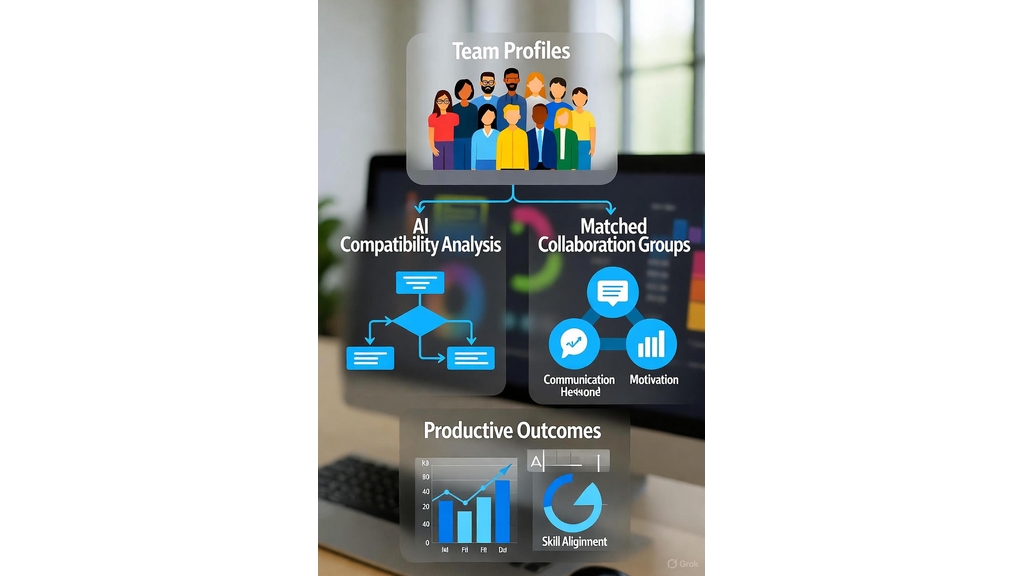
Its AI analyzes personal and professional data points to create balanced, compatible teams through factors like:
- Work rhythms: Morning vs. evening energy peaks.
- Collaboration style: Brainstorm-oriented or task-focused.
- Values and motivations: Innovation, structure, empathy, or growth.
- Skill complementarity: Strategists paired with executors for balanced delivery.
By aligning team members through compatibility metrics, Easy Pairing turns digital collaboration tools into synergy machines.
Making Tools Work Smarter, Not Harder
Easy Pairing doesn’t replace tools like Slack, Zoom, or Asana; it enhances them.
Once teams are matched by compatibility, every platform becomes more effective:
- Slack: Conversations stay constructive instead of chaotic.
- Zoom: Meetings flow better as personalities and energy levels align.
- Asana / Trello: Project cycles run faster with fewer bottlenecks.
When AI pre-aligns people’s work chemistry, collaboration stops feeling forced and starts feeling fluid.
Why Compatibility Drives Virtual Success
The benefits of AI-powered pairing extend across performance and morale:
- Reduced conflict: Teams communicate naturally, cutting friction.
- Increased engagement: Compatible teams sustain momentum longer.
- Faster delivery: Balanced roles and shared energy reduce lag time.
- Higher retention: People stay where collaboration feels effortless.
Compatibility doesn’t just make remote work easier; it makes it human.
The Future of Hybrid Synergy
In the era of distributed work, alignment beats proximity. The most successful organizations won’t be those that simply connect employees online, but those that connect them intentionally.
Easy Pairing is the quiet force behind that transformation; matching people by who they are, how they work, and what drives them. Across locations and time zones, it builds digital chemistry that lasts.

Conclusion
Easy Pairing elevates virtual collaboration from digital coordination to authentic connection. By combining AI precision with human understanding, it ensures remote teams don’t just communicate; they click. The future of collaboration isn’t about sharing a workspace; it’s about sharing compatibility.
Ready to transform your group matching?
Join thousands of organizations using Easy Pairing to create better teams and connections.
Get Started Free